
Used Industrial Robots Blog — Automation & Robotics Guides

Humanoid Robots in Manufacturing: Where They Add Value—and Where They Don’t Yet
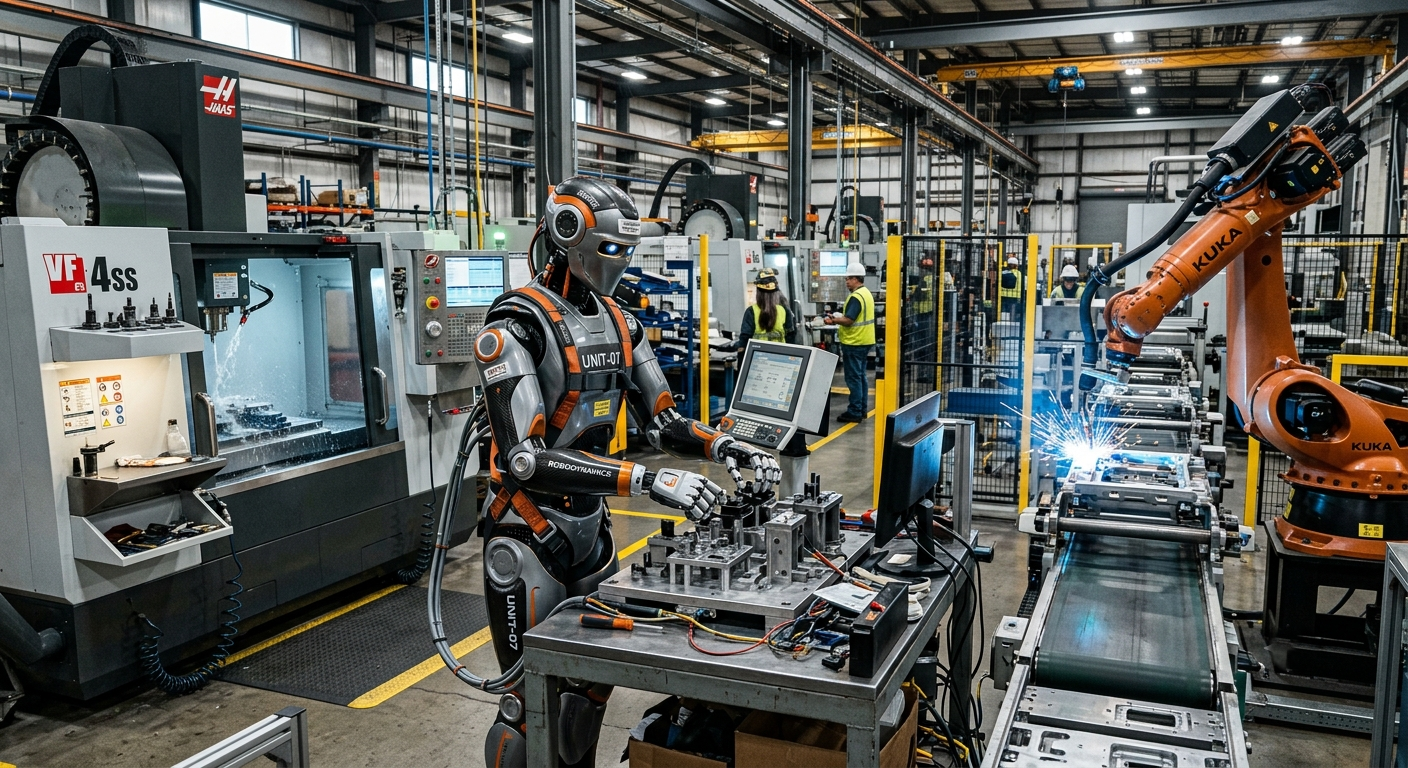
Humanoid robot performing industrial tasks alongside traditional automation equipment in a manufacturing plant

The Question Is Not Whether Humanoid Robots Work, but Whether They Solve the Right Production Problem The growing interest in humanoid robots industry applications has created a common assumption: that factories will soon replace traditional industrial robots with human-shaped machines. The reality is more nuanced. While humanoid robots have demonstrated promising capabilities in controlled environments, … Read more

Physical AI in Robotics: When Intelligence Moves Beyond Software into Production

Physical AI Is Not About Smarter Software Alone The question is no longer whether artificial intelligence can generate text or recognize images. The more important question for manufacturers is whether AI can help a robot operate reliably in the physical world, where parts are not always perfectly positioned, production conditions change, and unexpected events occur. … Read more

Robot Cell Layout Optimization: Practical Examples That Reduce Downtime and Improve Production Flow

Industrial robot cell with optimized equipment layout for efficient material flow

Why Robot Cell Layout Is About More Than Saving Floor Space Many automation projects focus on choosing the right robot, but robot cell layout optimization often has a greater influence on long-term performance than the robot model itself. A robot can be technically capable of the required task while the overall cell suffers from unnecessary … Read more

Why Robotic Milling Vibration Happens and How to Reduce It Before It Affects Production

Industrial robot performing a milling operation on a securely fixtured metal workpiece

Vibration Is Usually a System Problem, Not Just a Robot Problem When robotic milling vibration appears during production, the first reaction is often to question the robot itself. In practice, vibration rarely originates from the robot arm alone. It is usually the result of several interacting factors, including tooling, fixturing, machining strategy, workpiece rigidity, and … Read more

Robot + PLC Integration: What Must Work Before Automation Delivers Results

Industrial robot communicating with a PLC inside an automated manufacturing cell

Why Robot + PLC Integration Is About More Than Communication The biggest misconception about robot PLC integration is that once the robot controller and the PLC can exchange signals, the integration is complete. In practice, communication is only one part of a stable automation project. The real challenge is ensuring that both systems interpret production … Read more

AMRs vs Traditional Automation: Which Fits Your Production Environment Better?

Autonomous mobile robot transporting materials alongside fixed industrial automation in a manufacturing facility

Why the Choice Is Rarely Between “Old” and “New” Automation The discussion around AMRs vs traditional automation is often framed as if one technology is replacing the other. In practice, manufacturing companies are deciding something more specific: whether a production task benefits from flexibility or from predictable, fixed movement. That distinction has a far greater … Read more

Top Buying Mistakes That Turn Refurbished Robots Into Costly Investments

Engineer inspecting a refurbished industrial robot before purchase

Buying a Refurbished Robot Is Not the Same as Buying a Lower-Priced Robot The biggest mistake companies make when purchasing a refurbished industrial robot is assuming the purchase price determines whether the investment will be successful. In reality, the purchase price is only one part of the total project cost. A refurbished robot can become … Read more

When Delaying Automation Is the Better Production Decision

Production team evaluating whether a manufacturing process is ready for robotic automation

Technical Feasibility Does Not Mean Operational Readiness The main question is rarely whether a robot can perform the task. The more important issue is whether the process automation readiness of the production line is high enough to support a stable, measurable, and economically defensible project. A robot can repeat programmed movements consistently, but it cannot … Read more

When Refurbished Robots Make Sense for Warehouse Automation—and When They Do Not

Refurbished industrial robots automating warehouse material handling operations

Why Lower Purchase Cost Is Rarely the Real Warehouse Automation Decision The decision to automate a warehouse with refurbished warehouse robots is rarely about finding the lowest purchase price. The more important question is whether the existing warehouse processes, equipment, and operational goals allow a refurbished robotic system to deliver reliable performance over time. A … Read more

When Small Factory Automation Delivers ROI on a Limited Budget

Small manufacturing facility evaluating an industrial robot for a budget-conscious automation project

Why Budget Is Rarely the Biggest Constraint The biggest obstacle to small factory automation is often assumed to be budget. In reality, many automation projects fail because companies try to automate the wrong process first. A limited budget makes process selection even more important, because there is little room for expensive redesigns, unexpected integration work, … Read more